The pipe organ was invented in the 3rd century BC by Ctesibius of Alexandria, a Greek engineer. His invention, called the hydraulis, was an ancient water organ that used displaced water to maintain steady air pressure through a set of pipes.
Over the centuries, the instrument has evolved significantly from its ancient origins. In the 7th Century AD, bellows replaced water cisterns to supply wind to the pipes, allowing for the modern mechanical organs we know today. Between the 12th and 17th centuries, organs evolved into complex instruments capable of producing different tones and timbres, becoming the most complex machines humans had built at the time.
Organ-building techniques have also developed over the years, and modern organ builders but one thing has remained constant: building an organ is a highly skilled and labour-intensive task. As a result, pipe organs have remained expensive instruments.
Until now. With the advent of 3D printing, the manufacture of organ components is dramatically reduced in cost and human labour, allowing us to provide these 3D-printed organ kits at an affordable price. This kit aims to provide not just a working musical instrument at an affordable price, but an enjoyable project to assemble, and an educational opportunity to see and understand how the inside of a pipe organ works.
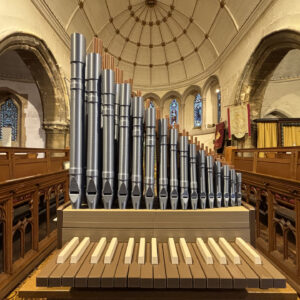
Portative organ kit
£795.00